.svg?dpl=dpl_H6TFiJ1Dur6Kzx14UDT92BQQ9gei)
2,000+
reports
Since 2010
ANZ-focused research
Continue reading
Log in to access weekly briefings, sector alerts and all report previews.
Log inNew here? Sign up freeUnlock more
Full report library, figures, charts, PDFs and stakeholder analysis.
View plans from $350/mo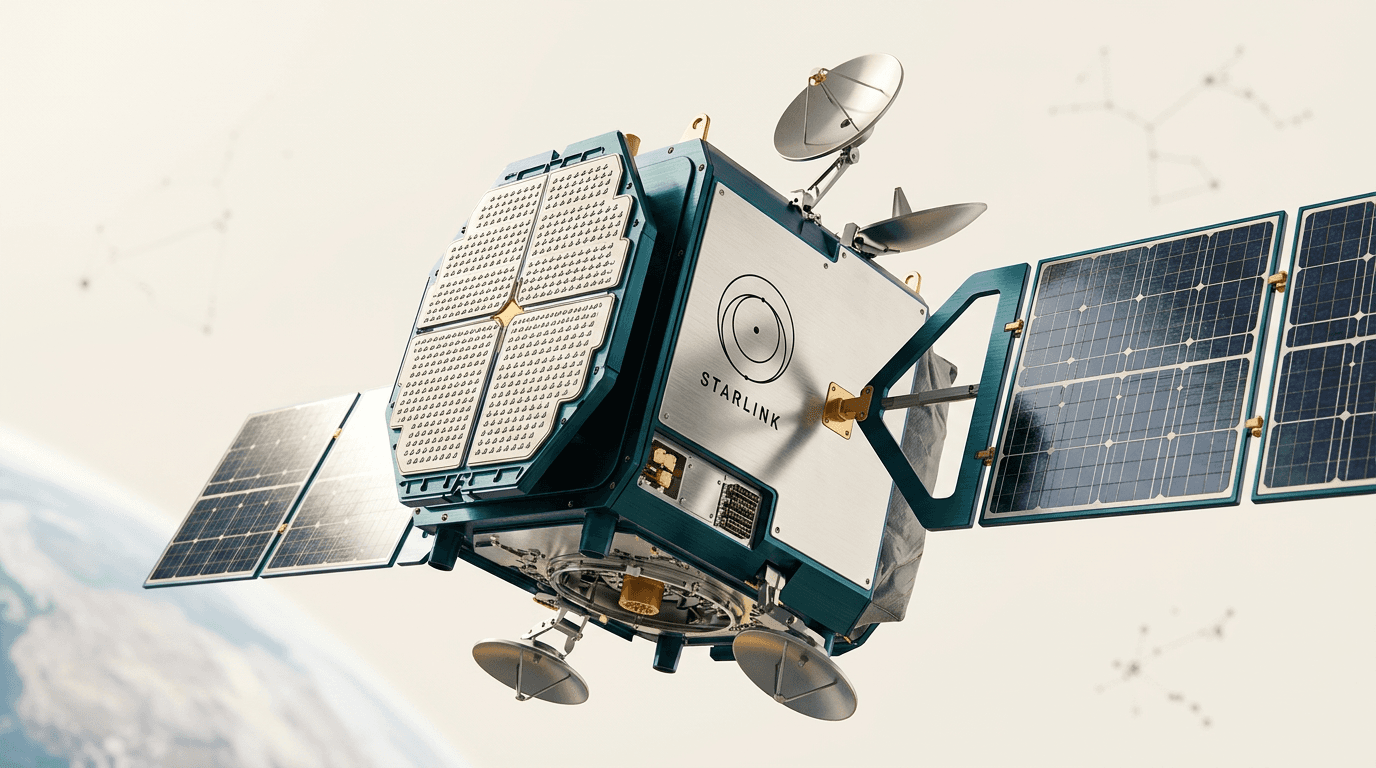
The largest IPO in history lands in a market where SpaceX is already threatening NBN Co and captivating ANZ telcos
Venture Insights · Venture Insights8 min read
Last updated
SpaceX IPO valuation
Starlink subscribers globally
Target IPO raise (Nasdaq: SPCX)
2025 revenue multiple (Morningstar)
Australian super assets at stake
V3 vs V1 satellite capacity uplift
The SpaceX IPO is not just another tech listing — it is the largest in financial history. SpaceX is targeting a 12 June 2026 Nasdaq listing under the ticker SPCX, with share pricing confirmed after market close on 11 June at US$135 per share, targeting a valuation of US$1.75 trillion. This eclipses Saudi Aramco's 2019 offering of US$25.6 billion by nearly three times, with SpaceX targeting a raise of approximately US$75 billion. The valuation multiples are, by any conventional measure, extraordinary. Morningstar estimates SpaceX will be marketed as a platform business at approximately 94 times 2025 revenue. By EBITDA, the implied valuation translates to an EV/EBITDA multiple of around 156× — far exceeding aerospace and defence sector benchmarks of 13.8× and internet services at 14.6×. The bull case for this premium rests primarily on Starlink. Starlink serves 9.2 million subscribers across over 150 countries, having doubled its base for two consecutive years, and generated an estimated US$10.6 billion in revenue and US$5.8 billion in EBITDA in 2025, representing approximately 67% of total company revenue at a 54% margin. Yet the financials carry material complexity. Despite reporting US$6.6 billion in adjusted EBITDA for 2025, SpaceX posted a GAAP net loss of US$4.94 billion for the full year, with Q1 2026 adding a further US$4.28 billion loss in a single quarter. The accumulated deficit now stands at US$41.3 billion. The gap is driven by aggressive AI infrastructure capex — the Colossus 1 data centre, housing 220,000 Nvidia GPUs, secured a deal with Anthropic worth US$1.25 billion per month through May 2029. Fifteen days post-listing, index mechanics will amplify demand: SpaceX is expected to enter the Nasdaq 100 approximately 15 days after listing, triggering an estimated US$22–27 billion in forced mechanical buying from QQQ index funds globally.
Australian superannuants have a direct stake in how this listing plays out — both through what they might gain and what they already carry as risk.
Australian superannuants have a direct stake in how this listing plays out — both through what they might gain and what they already carry as risk.
Australia's total superannuation assets have grown beyond A$4.5 trillion, with the top 24 funds (over A$20 billion) now accounting for approximately 96% of industry assets. A substantial portion of that capital is already flowing into US technology. Australia's superannuation system is heavily exposed to US equities, with around 20% — roughly A$800 billion — invested in American companies, many concentrated in AI-focused technology firms.
The currency exposure compounds this. Of the A$870 billion invested in US equities by Australian super funds, only A$193 billion — around 22% — is hedged against falls in the US dollar, meaning over A$1 trillion in superannuation investments is exposed to combined US market and currency risk.
The concern about concentration is now mainstream within the industry itself. A recent institutional investor survey found superannuation funds are more worried about the technology bubble than geopolitical risks for the first time in five years.
Once SPCX enters the Nasdaq 100 and triggers index rebalancing, every Australian super fund holding a passive international equities allocation will acquire SpaceX exposure automatically and at scale — without a deliberate investment decision being made.
The IPO is not simply a capital markets event. For Australian telcos, regulators, and the NBN, the proceeds represent rocket fuel — literally and commercially — for the competitive threat Starlink already poses domestically.
The IPO is not simply a capital markets event. For Australian telcos, regulators, and the NBN, the proceeds represent rocket fuel — literally and commercially — for the competitive threat Starlink already poses domestically.
Capacity step-change arriving H2 2026. The V3 satellite deployment begins this half-year. Each V3 carries 1 Tbps of downlink capacity — more than 125 times the capacity of the original V1 models — and will be deployed 60 at a time via Starship. This supply shock will drive price compression in rural and semi-urban fixed broadband, the markets where NBN Co and fixed wireless operators are already most vulnerable.
The UOMO policy trap. The Australian Government's Universal Outdoor Mobile Obligation has inadvertently handed Starlink structural leverage over domestic operators. Telstra, Optus, and TPG are legally required to deliver universal outdoor mobile coverage, but Starlink is the only viable supplier to meet these obligations before the 2027–28 deadlines. This means ANZ telcos are contractually captive to a direct competitor — one that will use the wholesale revenue to fund the very constellation that threatens their fixed broadband customer base.
Asymmetric risk allocation. Under current UOMO drafting, domestic operators bear 100% of the legal and regulatory risk for service quality, outages, and emergency coverage failures — even when the underlying infrastructure failure belongs to SpaceX. Starlink collects high-margin wholesale revenue with none of the regulatory accountability.
NBN Co's existential regional problem. NBN Co has characterised its position in regional satellite markets as an "existential battle," responding with ultra-cheap A$35/month wholesale tiers in its LEO trials. This is a defensive, margin-destroying posture — not a growth strategy.
Funding engine for AI ambition. SpaceX spent US$12.7 billion in AI capex in 2025 and US$7.7 billion in Q1 2026 alone. Starlink's connectivity EBITDA is the engine funding those ambitions. SpaceX has every commercial incentive to grow direct-to-consumer broadband revenue in Australia and New Zealand aggressively — the IPO will provide capital to do so faster.
Our forecast: doubling of ANZ connections by decade-end. Combining the V3 capacity deployment with this commercial imperative, Venture Insights' base case is that Starlink's fixed broadband connections across Australia and New Zealand will double before 2030. The competitive pressure will be most acute in regional and outer-urban markets, but national pricing structures will push some of that pressure into metropolitan areas as well.
The SpaceX IPO presents a unique duality for Australian stakeholders. As investors — via superannuation — Australians will gain passive exposure to one of the most aggressively valued listings in history, at a point when the AI and tech multiple cycle faces serious scrutiny. As consumers and citizens, they face a domestic market where the proceeds of that listing will be deployed to erode the competitive position of locally regulated, locally employed, and locally taxed telecommunications operators.
This is not a theoretical tension. It is structural — and it will deepen with every V3 satellite that goes live.
Venture Insights — Free access
Free account includes weekly sector briefings, alerts when new analysis drops, and full previews on every report.