.svg?dpl=dpl_9EVc7fiUgkWgF1wpnHudXDyUsyUt)
2,000+
reports
Since 2010
ANZ-focused research
Continue reading
Log in to access weekly briefings, sector alerts and all report previews.
Log inNew here? Sign up freeUnlock more
Full report library, figures, charts, PDFs and stakeholder analysis.
View plans from $350/mo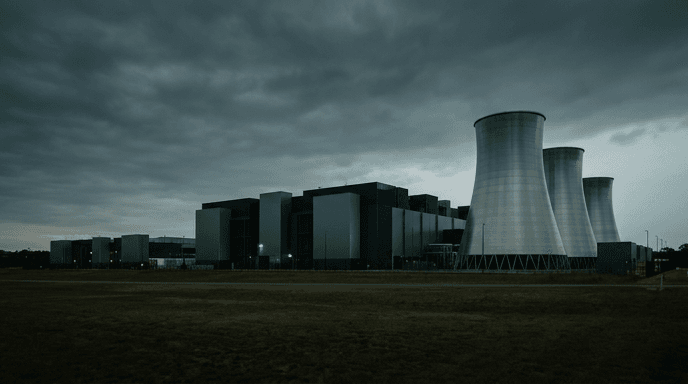
The February 2026 collapse of the ASX XIJ sector marks a structural shift from seat-based revenue to autonomous agentic workflows.
David Kennedy · Venture InsightsPeriod: Q1 20266 min read
Last updated
Single-day drop in the ASX 200 InfoTech sector in February 2026
Relative Strength Index (RSI) for the Tech Index, indicating oversold sentiment
NextDC hyperscale MoU with OpenAI for a GPU supercluster in Sydney
Goodman Group target for data centres under construction by mid-2026
The February 2026 collapse of the ASX Information Technology (XIJ) sector marks a structural pivot in the Australasian TMT landscape. Driven by a "confidence compression" in seat-based revenue models, market darlings like Xero and WiseTech have experienced historic de-valuations as artificial intelligence transitions from a tool to a terminal risk. Venture capital is focussed on a shift toward "Agentic Workflows" and "Systems of Context." Meanwhile, institutional investors are rotating heavily into physical infrastructure proxies like NextDC and Goodman Group. This report analyses the impact on IT managed and professional services firms and the consolidation strategies currently reshaping the regional technology stack. ICT consultants must pivot from selling human time to becoming scalable AI platform providers.
On February 4, 2026, the ASX Information Technology index plummeted 9.4% in a single session, triggered by a brutal rotation into resources and energy. Major casualties like Xero and WiseTech Global lost between 10% and 16% as investors fled premium multiples in favour of value sectors. This sell-off reflects a fundamental reset in what investors are willing to pay for growth that AI-driven agentic workflows may soon cannibalise.
As confidence in software applications erodes, institutional capital is rotating into "physical infrastructure proxies" that serve as the backbone of the AI economy. NextDC has emerged as a high-beta proxy for this trade, solidified by its 550MW hyperscale MoU with OpenAI for a GPU supercluster in Sydney. Simultaneously, Goodman Group is recycling capital into digital infrastructure, targeting 0.5 gigawatts of data centres under construction by mid-2026.
Leading Australasian VCs like Blackbird and AirTree are signaling a transition to a "post-SaaS" world where companies must move from "Systems of Record" to "Systems of Context". This shift requires software to evolve from user-centric tools that wait for human input to agentic-centric systems that autonomously execute multi-step tasks. Founders are being pushed to build "AI-native" architectures that solve entire business processes end-to-end rather than offering modular features.
Private equity heavyweights like BGH Capital and Pacific Equity Partners are restocking multi-billion dollar "war chests" to target the carnage in legacy software. Their rationale rests on the "sticky" data of legacy SaaS, where they intend to drive margin expansion by replacing massive sales teams with AI sales bots.
The 2026 TMT reckoning in Australasia confirms that the "SaaSpocalypse" is not a cyclical correction but a fundamental restructuring.
For incumbents, seat-based revenue is no longer a defensible moat; the unit of value has shifted from the "seat" to the "outcome" delivered by autonomous agents. In particular, telcos that operate in this market must now contemplate heavy new investment in AI platforms and significant labour adjustment.
Infrastructure remains the primary beneficiary of the AI transition, as sovereign data requirements and power density demands favour physical asset owners.
Finally, the "Productivity Paradox" highlights that the new business processes needed to implement this shift are still nascent. The “technical debt” AI is now generating reflects human bottlenecks in review and testing. Until this problem is mastered, the technical debt of AI-generated code will continue to weigh on margins.
Venture Insights — Free access
Free account includes weekly sector briefings, alerts when new analysis drops, and full previews on every report.
By taking these firms private, PE sees an opportunity to cut Sales & Marketing budgets aggressively while focusing on product-led growth (PLG) and automated expertise.
Accenture’s "AI Paradox" - reporting record GenAI technology consulting bookings while its stock price falls - illustrates the existential threat that AI now poses to human-capital-driven business models. The opportunity is the threat. "Agentic code" will replace human billable hours, and managed and professional services companies are themselves becoming the next "dominoes" likely to fall to AI disruption.
ICT consultants must pivot from selling human time to becoming scalable AI platform providers, or risk a collapse in employee utilisation rates. And this must be done in a way that addresses the code quality degradation, security vulnerability growth, and unsustainable maintenance burdens - the “technical debt” - that AI-written code is currently generating.
On 4 February, the ASX trading session was characterised by "capitulation-style selling," where investors sought exits regardless of price, driven by fears that ASX tech leaders were "AI adopters" rather than true "innovators". The destruction of value was concentrated among the highest-profile names in the sector, including Xero (XRO), WiseTech Global (WTC), and TechnologyOne (TNE), which had previously traded at premiums far above historical averages.
The technical indicators for the sector suggest a level of oversold sentiment comparable only to the aftermath of the dot-com bubble. On a weekly chart, the Relative Strength Index (RSI) for the Tech Index hit 19, which is significantly lower than the levels seen during the pandemic or the GFC. This suggests that the sell-off is not merely a cyclical correction but a fundamental de-rating driven by structural anxiety.
| Ticker | Company Name | Feb 4 Close (A$) | One-Day Change (%) | YTD Performance (%) | 52-Week High/Low Delta |
|---|---|---|---|---|---|
| XRO | Xero Ltd | 80.82 | -15.9% | -29.0% | -56% from Peak |
| WTC | WiseTech Global | 51.25 | -10.7% | -25.2% | -58% from Peak |
| TNE | TechnologyOne | 22.65 | -10.5% | -17.8% | -46% from Peak |
| 360 | Life360 Inc | 26.94 | -5.9% | -20.3% | +54% Revival |
| BVS | Bravura Solutions | 1.84 | -7.1% | -28.6% | 52-Week Low |
| XIJ | ASX 200 InfoTech | - | -9.4% | -17.0% | 52-Week Low |
Source: Venture Insights
Source: Venture Insights / BVP Nasdaq
The BVP Nasdaq Emerging Cloud Index (EMCLOUD) is a specialised benchmark designed to track the performance of emerging public companies that primarily derive their revenue from providing business-oriented software and services via the cloud (SaaS). Managed by Nasdaq in partnership with Bessemer Venture Partners (BVP), the index focuses on "pure-play" cloud firms that utilise subscription-based or volume-based economic models.
The provided chart illustrates a period of significant divergence where the EMCLOUD Index (-30.7%) vastly underperformed the broader market benchmarks:
Extreme Divergence from Broad Indices: While the Nasdaq (+16.5%), S&P 500 (+14.0%), and Dow Jones (+11.1%) all posted double-digit gains over the year, the Emerging Cloud Index collapsed by over 30%. This suggests that while the "Magnificent Seven" and large-cap tech drove the broader market higher, smaller "high-beta" cloud growth stocks faced a severe valuation contraction.